


Winter Visitors: The Birds That Come Here for Our Winter
We tend to think of migration as birds leaving. But for a great many birds, the UK in winter is the destination. As the Arctic freezes and the Scandinavian forests empty of food, millions of birds fly south and west to spend the winter on our relatively mild coasts, estuaries and fields. Some of them are among the most spectacular sights in nature.
Barnacle Geese From Svalbard
Every autumn, almost the entire population of barnacle geese that breeds on Svalbard, an archipelago far north of Norway in the Arctic Ocean, flies around 3,000 kilometres to spend the winter on the Solway Firth, on the border between England and Scotland.
They breed in one of the most remote places on Earth, where summer brings 24-hour daylight and winter brings months of darkness. In the UK they graze on the saltmarshes and fields along the Solway, and at dawn and dusk tens of thousands of them fly between their roosts and feeding grounds, filling the sky with noise.
Other populations of barnacle geese, from Greenland, winter on the islands of western Scotland, particularly Islay.
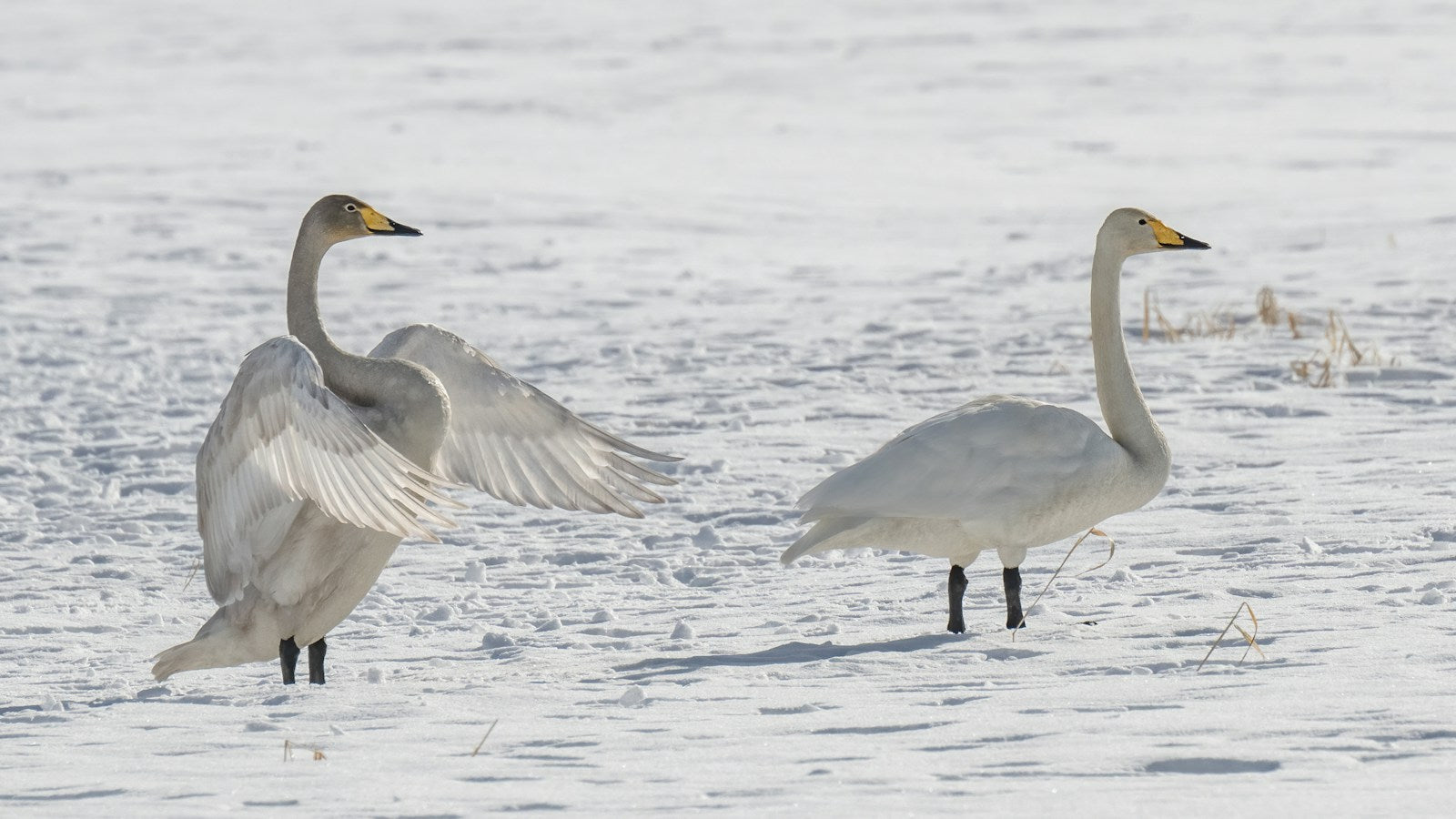
Whooper Swans From Iceland
Whooper swans are large, wild, yellow-billed swans that breed mostly in Iceland. Each autumn, many of them fly around 800 kilometres across the North Atlantic to the UK and Ireland, often in a single non-stop flight that can take around 12 hours.
They are named for their loud, bugling calls, and a flock coming in to land on a winter lake is one of the great sounds of the season. Good places to see them include the WWT reserves at Martin Mere in Lancashire, Welney in Norfolk and Caerlaverock in Dumfriesshire, where the evening feeds are a popular spectacle.
Brent Geese From Siberia
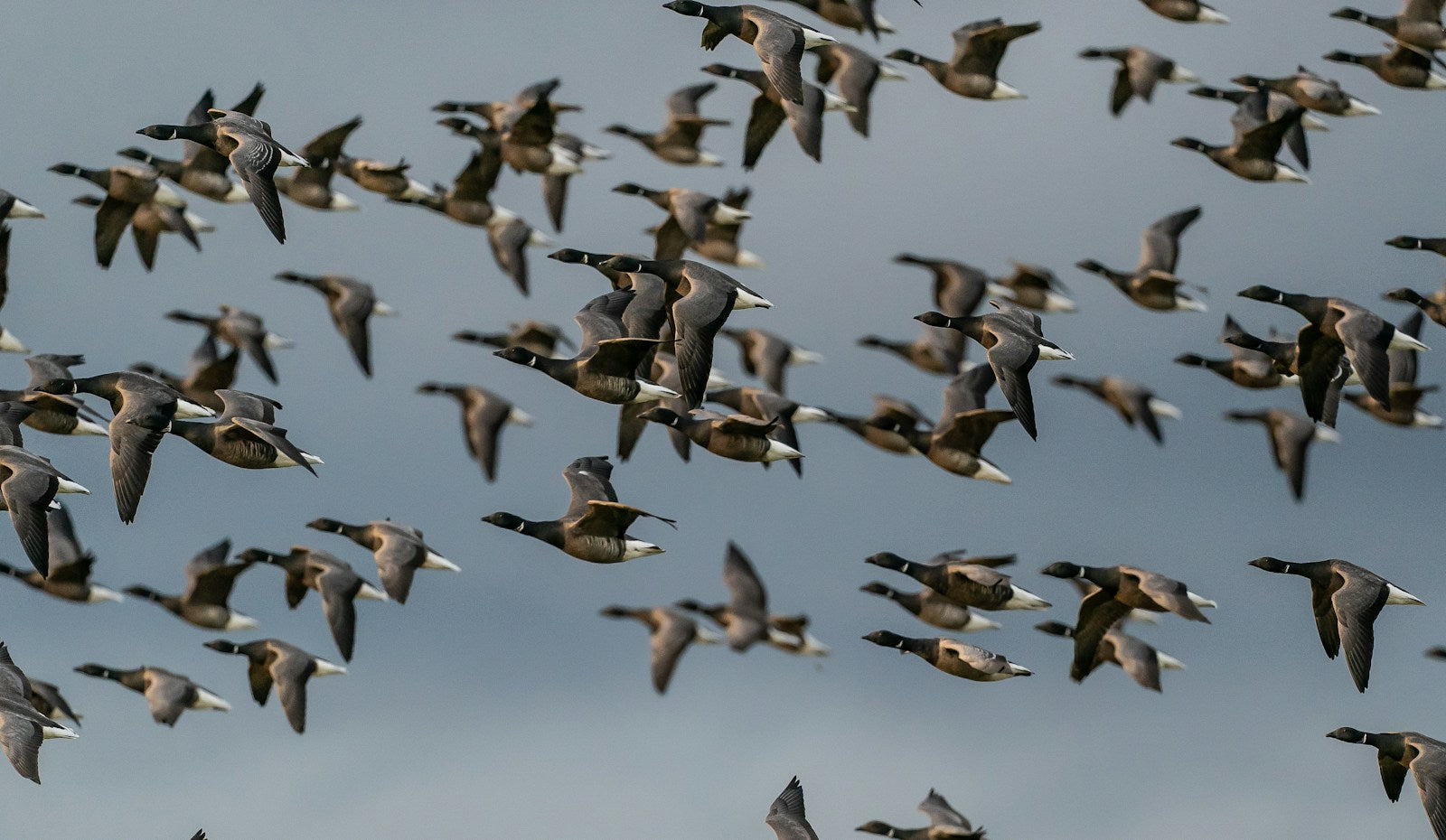
Dark-bellied brent geese breed on the Arctic tundra of Siberia, close to the top of the world, and spend the winter on the estuaries and coasts of southern and eastern England, from the Wash to the Solent.
They are small, dark geese that feed on eelgrass and saltmarsh plants, and in winter they gather in large, chattering flocks. Their journey is one of the longest of any goose, and the Siberian summer is short, so in a bad breeding year few young birds make it to the UK.
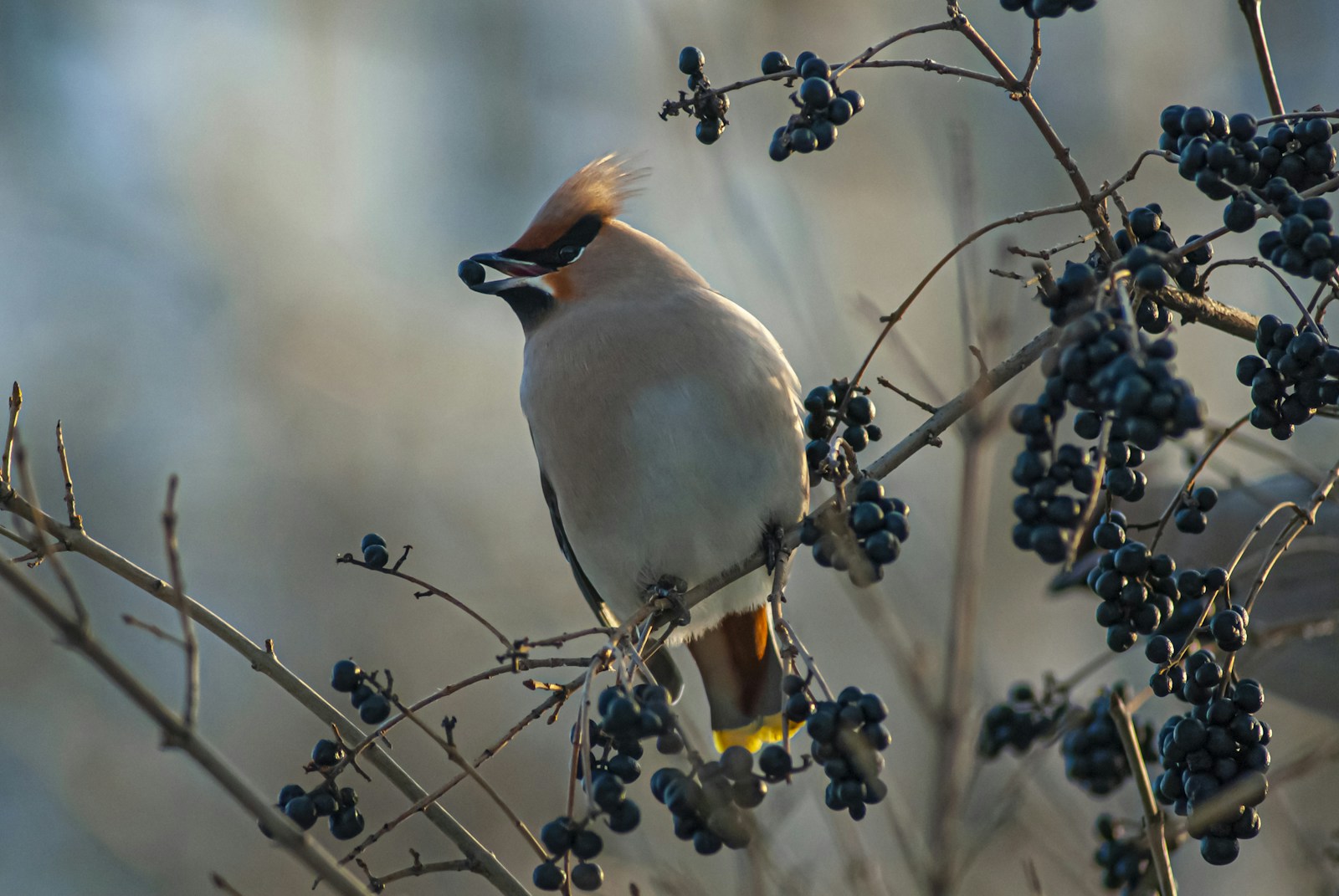
Waxwings From Scandinavia
Waxwings are one of the most exciting winter birds to see, partly because they are so unpredictable. They breed in the forests of northern Scandinavia and Russia and feed on berries. In years when the berry crop fails there, large numbers fly west and south in search of food, an event known as an irruption.
When they come, they often turn up in towns, in supermarket car parks and on housing estates, stripping rowan, cotoneaster and other berry trees. They are plump, crested and beautifully marked, and surprisingly tame. In some winters there are hardly any. In others they are everywhere.
Other Winter Visitors
Many other birds arrive for the winter, often unnoticed. Redwings and fieldfares, both members of the thrush family, come from Scandinavia and can be seen feeding on berries in hedgerows and on lawns. Large numbers of blackbirds, robins and starlings also arrive from the continent to join our resident birds.
Watching From Home
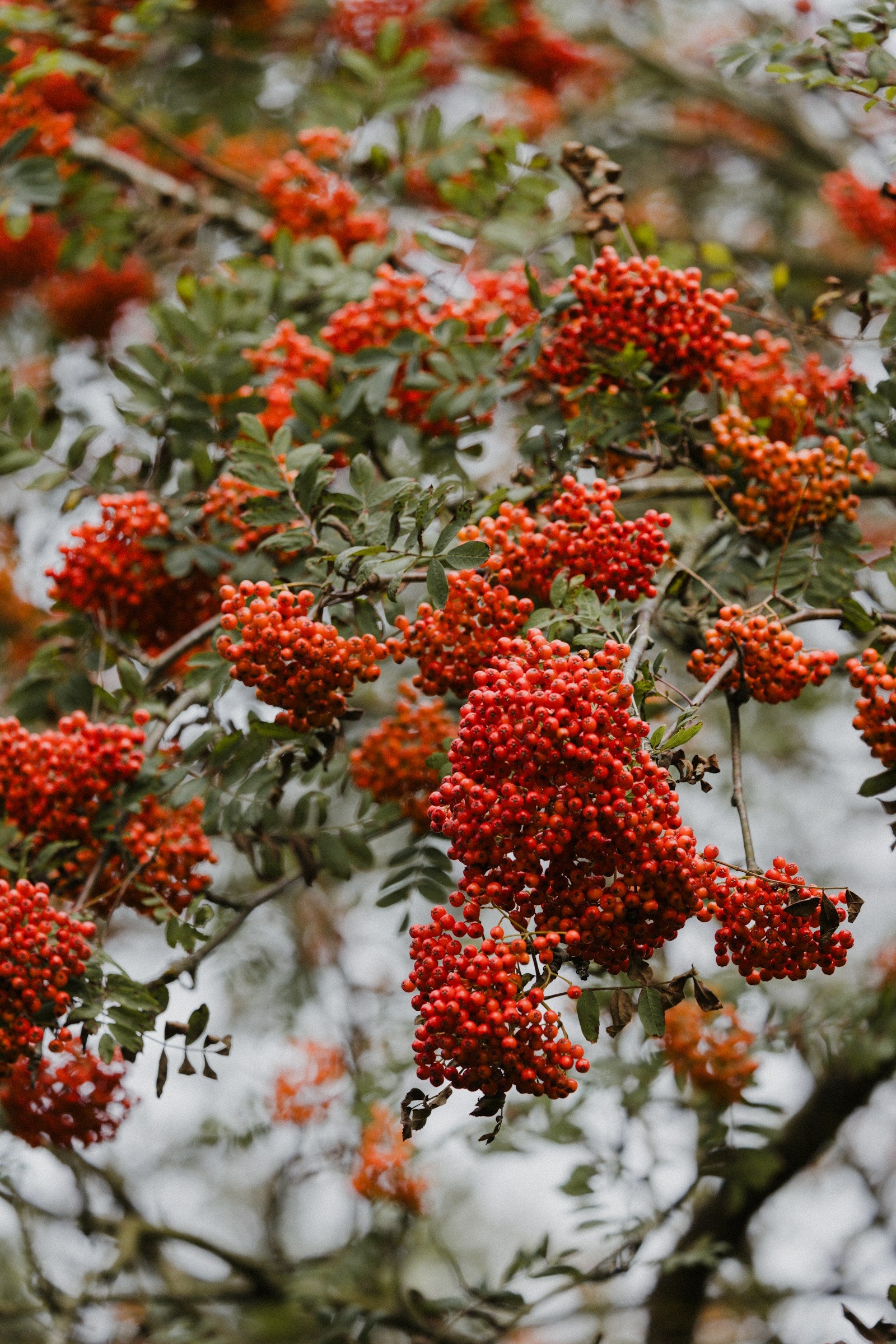
You do not need to travel to a reserve to enjoy winter visitors. Berry-bearing shrubs in the garden, such as holly, rowan, pyracantha and cotoneaster, attract thrushes and, in a good year, perhaps waxwings. A bird feeder and a shallow dish of water help garden birds through the cold months.
A sheltered seat by the window or under a covered space, a pair of binoculars and a flask of something warm make watching easy, even on cold days. Winter birdwatching is one of the gentlest ways to get outside in the darkest months, and you never quite know what might turn up.
Where to See Them
Barnacle geese: WWT Caerlaverock on the Solway Firth, and Islay in the Inner Hebrides.
Whooper swans: WWT Martin Mere in Lancashire, WWT Welney in Norfolk and WWT Caerlaverock, where floodlit evening feeds are held through the winter.
Brent geese: Estuaries and harbours along the south and east coasts, including Chichester Harbour, the Exe Estuary and the north Norfolk coast.
Waxwings: Anywhere with berry trees in an irruption year, often in towns and car parks. Local bird groups and social media usually report sightings quickly.
Redwings and fieldfares: Hedgerows, fields and orchards across the country, and in gardens during cold snaps.
Watching Responsibly
Wintering birds need to conserve energy to survive the cold. Keep a respectful distance, especially from feeding and roosting flocks, keep dogs under control near wetlands and follow any guidance at reserves. Disturbing a flock forces the birds to use energy they can ill afford.
Quick Answers
When do winter visitors arrive? Most arrive between October and November, and leave again in March and April.
Do I need binoculars? They help a great deal, especially for geese and swans at a distance. Even a basic pair makes birdwatching more rewarding.
Can I attract winter thrushes to my garden? Leave windfall apples on the lawn and plant berry-bearing shrubs. Redwings and fieldfares often visit in hard weather.
Want somewhere sheltered to watch the seasons change?
Book a free virtual appointment and we'll talk through a covered space that lets you enjoy the garden in every weather — no pressure, just straight advice.


